

157
Book · 2023
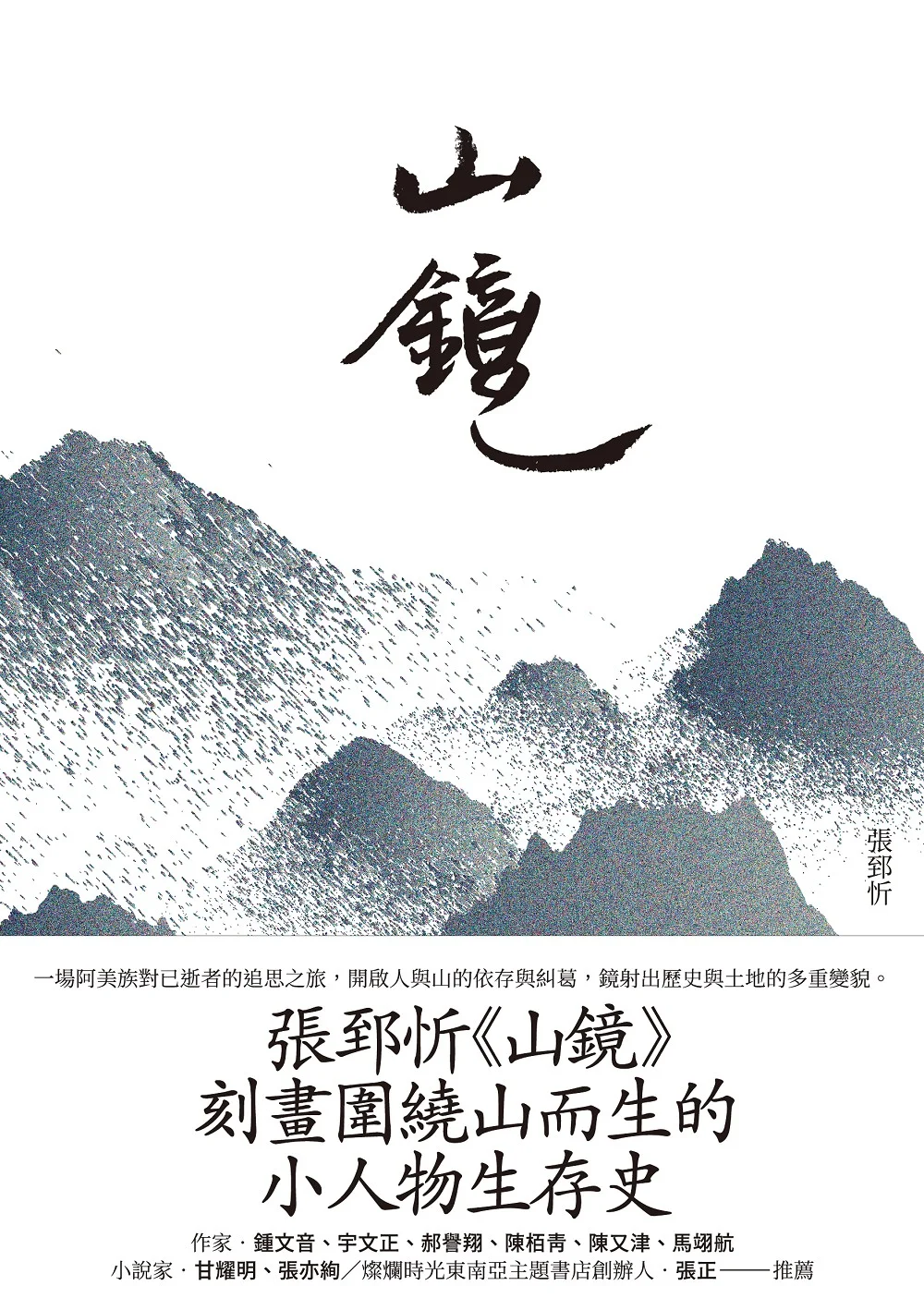
Mountain Mirror
山鏡Following the death of an enterprising Hakka man who spent decades deeply intertwined with indigenous communities in Hsinchu's mountainous Wufeng Township, his family and tribal companions embark on a commemorative journey. Through shifting perspectives among his indigenous wife, daughter, and friends, the novel explores land displacement, communal memory, and intercultural coexistence across contemporary Taiwan.
Your call
Already know it? Recommend it too.
Details
Around the Web
After reading Mountain Mirror, I realized how easily people judge cultures different from their own through their own lens, slapping stereotypes onto divergent perspectives while ignoring the histories, cultures, and significance of other ethnic groups. Mountain Mirror prompted me to reflect consciously on how to build genuine equality and respect in a pluralistic society. From the novel, we see that while some choose confrontation, others strive to resolve conflict through understanding and exchange. This made me realize: the prerequisite to solving ethnic prejudice is coexistence, and the key is communication. Only when we set aside bias and truly listen to the stories of different communities can we cross the walls within our hearts.
楊予岑 on 國藝會線上誌 In Mountain Mirror, everything revolves around the Acacia tree at Bailan Villa. This tree is not just an essential scenic element, but a unifying symbol throughout the entire story, bearing the characters' memories, emotions, and destinies. Why do I feel the Acacia tree is such a central symbol? Because the relationships among the characters are as intricate and deeply intertwined as tree roots. The Acacia tree is not just a plant; it is an emotional beacon representing memory and an enduring bond.
許汝方 on 國藝會線上誌 Winner of the Taiwan Literature Awards in 2024, “Mountain Mirror” narrates the historical development of mountain recreation businesses, from forest resorts to campsites, revealing the conflicts, compromises, and collaboration between Indigenous and Han people in conserving natural resources.
From Ministry of Culture The jury found Mountain Mirror not only engaging, but distinct in overall structure and technical craft. The author commands several narrative strands without confusion, using different perspectives to tackle complex Indigenous-Han tensions. By telling a story rather than preaching, she fosters understanding of intercultural conflicts; the language is restrained, the emotion rich, and the psychological nuance exquisitely drawn.
From 500輯 In terms of novelistic craft, Xiao Zhang's tour-guide salesmanship is a pivotal narrative device through which the author weaves in mountain atmosphere and surrounding sites, such as the former residence of Chang Hsueh-liang. These locales are more than mere place names; mentioning Chang Hsueh-liang's former home incorporates the history of his prolonged house arrest into the novel. The most pervasive themes throughout the book, naturally, are the ever-present entanglements between Indigenous and Han peoples and the commercial interests of mountain development.
果子離 on Readmoo 閱讀最前線
1 / 5
Why people recommend it
No reasons shared yet. Tell others what makes this title worth their time.