

230
Book · 2003
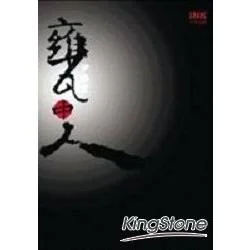
甕中人
This debut collection uses formally inventive stories to examine illness, death, desire, and the instability of identity. Clinical settings and shifting perspectives turn bodily vulnerability into unsettling literary experiments.
Your call
Already know it? Recommend it too.
Details
Around the Web
Egoyan Zheng's 'Man in the Urn' is truly fantastic. As you read his prose, it evokes a vivid sensation of pictures and sounds, almost like clips from a film. This style of depiction and narrative framing feels remarkably familiar and natural to someone like me who loves cinema.
陳信鈞 Tân Sìn-kun on Blogger The earliest piece in 'Man in the Urn,' 'A Fiction Falsely Claiming to Be the Author's Reply,' already foreshadowed his tendency to twist the boundary between reader, writer, and self. Meanwhile, the four interconnected works—'Ritual,' 'Turtle Urn,' 'Ghost Urn,' and 'Man in the Urn'—showcase a deliberate blending of archaic dialect that lends distinct texture and rhythm, breeding human obsession and bereavement amid slumber and phantoms. It is an urn, a tomb, harboring something that transcends the native soil.
馬翊航 on 聯合文學 Egoyan Zheng's 'Man in the Urn' features graceful, poetic prose full of aestheticist imagery. It is not difficult to read, but thoroughly captivating. The stories are divided into two parts by a prologue, intermission, and finale, as if the author is staging a theatrical performance for the reader. Most stories are independent, yet the final three—'Turtle Urn,' 'Ghost Urn,' and 'Man in the Urn'—are linked and hold potential for a novel. My favorite is 'Iris'; beyond its beautiful imagery, the hazy, romantic atmosphere reminded me of Yasunari Kawabata (a memory from over a decade ago). There are many kinds of tragedy, but in Egoyan Zheng's fiction, sorrow itself is rendered beautifully.
卵生水筆仔 on Blogger
1 / 3
Why people recommend it
No reasons shared yet. Tell others what makes this title worth their time.