

141
Book · 2017
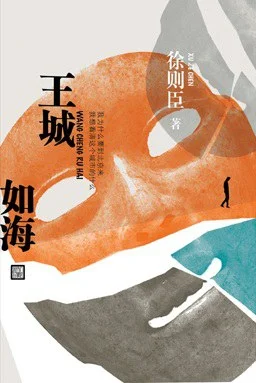
The Imperial City is Like the Sea
王城如海Set against the smog-blanketed sprawl of contemporary Beijing, returned avant-garde theater director Yu Songpo sparks a public firestorm with his provocative new play, The Urban Revelation. When an estranged street wanderer and the family of his domestic worker cross his path, an old secret from a past medical misdiagnosis resurfaces, threatening to unravel his household. Xu Zechen crafts a nuanced panoramic inquiry into urban alienation, hidden guilt, and moral responsibility across social classes in modern China.
Your call
Already know it? Recommend it too.
Details
Around the Web
Through the intertextuality of drama, novel, and diary, the colossal entity of "Beijing" undergoes multiple reconstructions, emerging as all the more multidimensional and three-dimensional. These three forms signify three distinct facets of Beijing: Beijing in a global perspective, Beijing in everyday reality, and Beijing anchored in its vast agrarian roots.
王书含 on 光明网 The smog hangs heavy, the imperial city stretches like a sea. It is not a story of melodramatic twists, yet the prose is steady, fluid, and richly rewarding to read. Readers who have lived as migrants in Beijing will likely feel its resonance even more deeply.
七亩田 on 豆瓣 The book centers on a returned scholar in Beijing, tracing a highly educated senior returnee's journey back to the capital. The psychological dynamics are compelling: the protagonist's inner conflict, the nanny's blind worship, the student's suspicions, the courier's temperament, and above all, the darkest and brightest moments buried in the director's soul. Thinking of my own life in Shanghai, apart from the lack of Beijing dialect and smog, it feels scarcely different. Big cities make people resolute yet emotionally rigid, so people choose loneliness and sorrow, because that brings them closer to being truly human.
西格玛男人 on 豆瓣 "I was deeply moved reading this novel; I felt as if Xu Zechen was writing directly about me." In the view of critic Yang Qingxiang, what the author captures is life right around him. Using a panoramic lens, the writer constructs a three-dimensional, cross-sectional modern metropolis with genuine depth. In the novel, Beijing serves as a colossal symbol—not merely signifying Beijing itself, but all colossal cities constructed within modern order and the immense psychological toll and injury such vast urban landscapes inflict on human spirits.
杨庆祥 on 中国艺术报 Particularly noteworthy is how different characters and themes, history and the present, morality and retribution continually collide and interact. Across artistic form, thematic consciousness, and aesthetic imagery, they establish a multi-layered narrative tension. Themes, characters, and ideas exhibit rich polyphonic relationships, effectively expanding the interpretive intellectual horizon of the novel.
李徽昭 on 文汇报
1 / 5
Why people recommend it
No reasons shared yet. Tell others what makes this title worth their time.