

203
Book · 2000
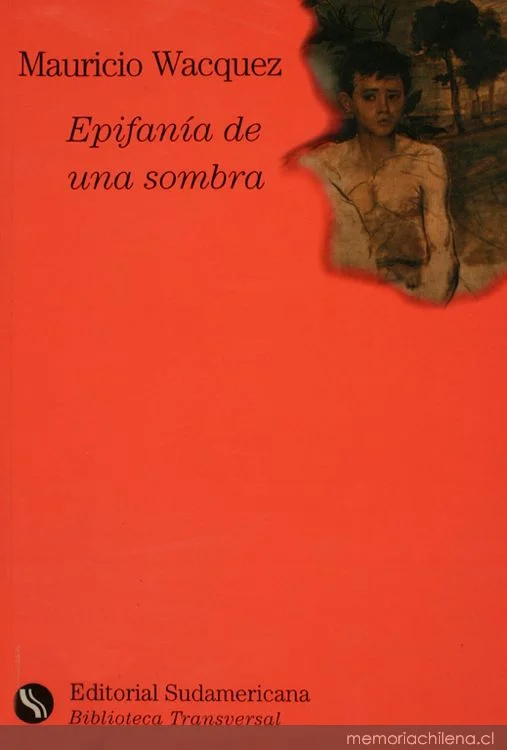
Epifanía de una sombra
Chronicling the childhood and coming-of-age of its protagonist between rural Colchagua and Santiago, the novel explores aristocratic decline, desire, and mortality in mid-twentieth-century Chile.
Your call
Already know it? Recommend it too.
Details
Around the Web
With magnificent command of language, Wacquez pursues the liberation of the senses, the defeat of moral repression, and the dismantling of falsely universal values. His descriptions of nature in Chile's Central Valley may well be the most precise and vivid in our fiction.
From Artes y Letras The novel is a chronicle in which the narrator recounts autobiographical events without chronological order, propelled solely by the flow of remembrance, attempting to bestow meaning upon an existence lived against the grain of established orders.
From Memoria Chilena Considering the current state of national literature, this novel represents an extraordinary settling of scores; a dark and lavishly disproportionate indulgence.
Gonzalo Rojas González on Taller de Crítica Literaria Mariano Aguirre In this book by Wacquez, which undoubtedly touches upon what is most deep-seated in our stratified culture, nothing, absolutely nothing is predictable. And just as there is no trace of strain in the prose, neither is there any concession to history, sociology, or chronicle. Everything breaks free from categories.
Ana María Risco on Primera Línea The posthumous novel Epifanía de una sombra (Santiago, Chile, October 2000), the first installment of the unfinished trilogy La oscuridad, confirms that Wacquez is one of the most compelling 20th-century writers in the Spanish language.
Brian J. Dendle on Revista Chilena de Literatura
1 / 5
Why people recommend it
No reasons shared yet. Tell others what makes this title worth their time.